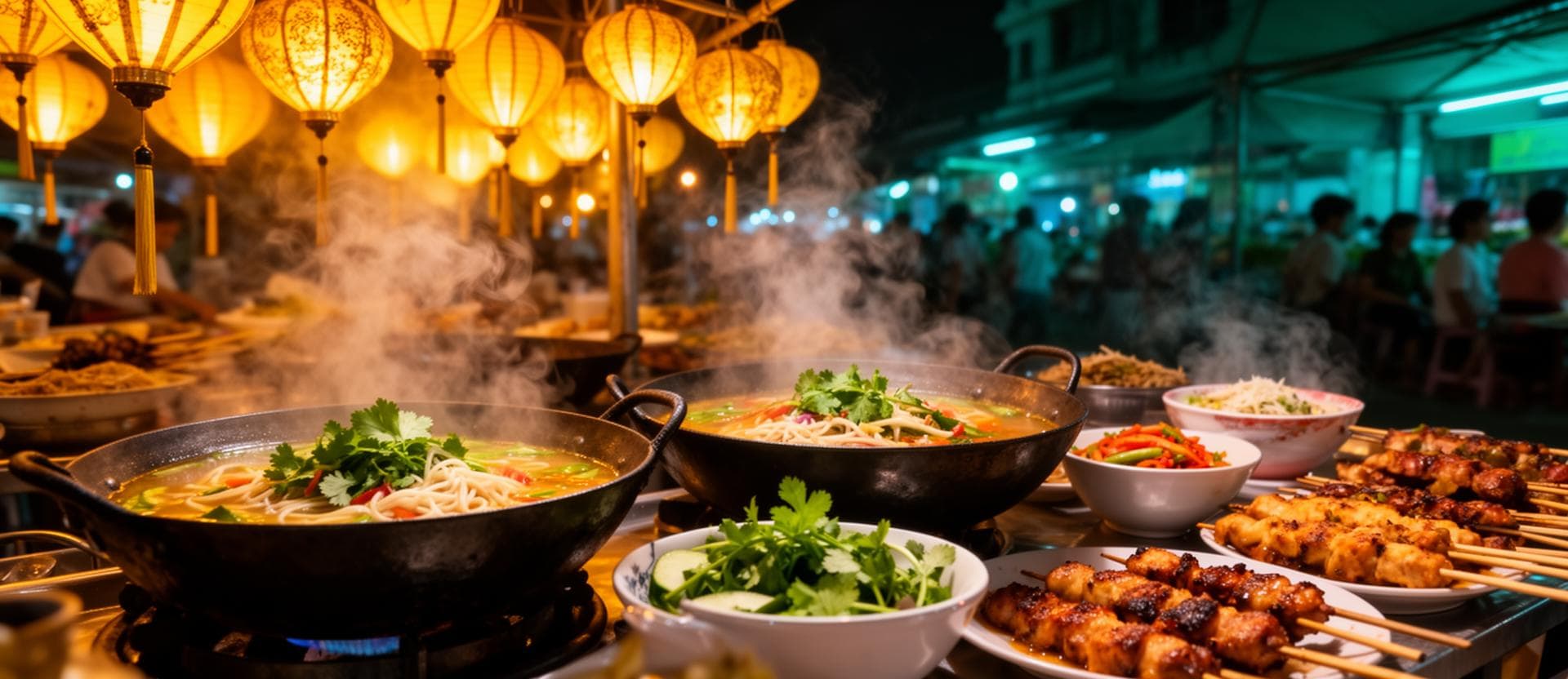
Cambodian Food & Cuisine
From fragrant fish Amok to bustling street food markets, Cambodian cuisine offers bold flavors built on fresh herbs, fermented fish paste, and centuries of culinary tradition.
What is traditional Cambodian food?
Cambodian (Khmer) cuisine features fresh herbs, coconut milk, and fermented fish paste (prahok). The national dish is Fish Amok — a steamed fish curry in banana leaf. Street food meals cost $1-3.
- Fish Amok — Steamed coconut curry, Cambodia's signature dish
- Lok Lak — Stir-fried beef with lime-pepper sauce
- Kuy Teav — Breakfast noodle soup ($1-2)
- Kampot pepper crab — World-famous regional specialty
- Street food is safe, affordable, and delicious
Explore Food Guides
Must-Try Dishes
Essential Cambodian dishes every visitor should experience, from Fish Amok to Lok Lak.
Street Food Guide
Navigate Cambodia's vibrant street food scene with confidence and discover hidden gems.
Regional Specialties
Explore unique culinary traditions from Kep crab to Battambang krolan.
Cooking Classes
Hands-on cooking experiences in Siem Reap, Phnom Penh, Kampot, and beyond.
Vegetarian & Vegan
Navigate meat-free dining with essential phrases and restaurant recommendations.
Overview
Cambodian cuisine, often called Khmer cuisine, stands distinct from its Southeast Asian neighbors with its emphasis on fresh herbs, subtle spicing, and the ubiquitous prahok (fermented fish paste). While sharing influences with Thai and Vietnamese cooking, Cambodian food tends to be less spicy and more herb-forward.
The cuisine reflects Cambodia's geography: freshwater fish from the Tonle Sap and Mekong, rice from fertile plains, and tropical fruits year-round. Street food culture thrives, with morning markets offering noodle soups and grilled meats, while evening brings barbecue stalls and family-style dining.
Khmer Flavor Profile
Key ingredients defining Cambodian cuisine: kroeung (lemongrass paste), prahok (fermented fish), Kampot pepper, palm sugar, tamarind, kaffir lime leaves, and galangal. These create the distinctive sweet, sour, and savory balance of Khmer cooking.
Must-Try Dishes
These essential Cambodian dishes showcase the depth and variety of Khmer cuisine. Don't leave Cambodia without trying each one.
Amok
(អាម៉ុក)Cambodia's national dish. Steamed fish curry with coconut milk, kroeung paste, and kaffir lime leaves, traditionally served in a banana leaf bowl.
Lok Lak
(ឡុកឡាក់)Stir-fried beef cubes with lettuce, tomatoes, onions, and a tangy lime-pepper dipping sauce. Often served with a fried egg on top.
Kuy Teav
(គុយទាវ)Breakfast noodle soup with pork or beef broth, rice noodles, and various toppings. Cambodia's go-to morning meal.
Nom Banh Chok
(នំបញ្ចុក)Khmer noodles with fish-based green curry sauce, fresh vegetables, and herbs. A refreshing breakfast dish.
Bai Sach Chrouk
(បាយសាច់ជ្រូក)Grilled pork with rice, Cambodia's most popular breakfast. Served with pickled vegetables and a clear broth.
Prahok Ktis
(ប្រហុកខ្ទិះ)Fermented fish paste cooked with coconut milk and pork. An acquired taste but beloved by locals. Served with raw vegetables.
Street Food Guide
Cambodia's street food scene is vibrant, affordable, and delicious. Markets and roadside stalls serve everything from noodle soups to grilled insects.
Popular Street Foods
Num Pang
Cambodian baguette sandwich with pâté, pickled vegetables, and meat
Fried Insects
Crickets, tarantulas, and other crunchy snacks - a Cambodian specialty
Num Krok
Coconut rice cakes, crispy outside and soft inside
Cha Houy Teuk
Colorful Cambodian jellies, often with coconut milk
Skewered Meats
Grilled pork, chicken, or beef on sticks with sweet sauce
Fried Bananas
Battered and deep-fried bananas, a sweet afternoon snack
Best Street Food Spots
- Phnom Penh: Central Market (Phsar Thmei), Russian Market, Street 172
- Siem Reap: Old Market, Pub Street area, Night Market
- Battambang: Phsar Nath Market, riverside evening stalls
Regional Specialties
Each region of Cambodia has its own culinary identity, shaped by local ingredients and traditions.
Phnom Penh
Best variety and quality. Street food scene around Central Market.
Siem Reap
Pub Street for variety, Old Market for authentic local food.
Kampot
Famous for world-renowned Kampot pepper. Crab market is essential.
Kep
Crab Market is iconic. Best eaten at sunset facing the ocean.
Battambang
Known as Cambodia's rice bowl. Excellent fruits and local specialties.
Dining Guide
Understanding where and how to eat in Cambodia helps you get the best experience at every budget level.
| Type | Price Range | Description |
|---|---|---|
| Street Food | $0.50-3 | Markets, mobile carts, roadside stalls |
| Local Restaurant | $2-6 | Simple eateries, local favorites |
| Tourist Restaurant | $5-12 | English menus, AC, Western options |
| Fine Dining | $15-50+ | Upscale Khmer, international cuisine |
Dining Etiquette
- • Rice is the center of every meal
- • Food is shared family-style
- • Use spoon in right hand, fork in left
- • Tipping 10% appreciated but not required
Meal Times
- • Breakfast: 6:00-9:00 AM
- • Lunch: 11:30 AM-1:30 PM
- • Dinner: 6:00-9:00 PM
- • Street food available throughout day
Vegetarian & Vegan Options
While Cambodia isn't traditionally vegetarian-friendly, options are growing, especially in tourist areas.
Hidden Ingredients Warning
Many Cambodian dishes contain fish sauce or prahok even when they appear vegetarian. Always specify your requirements clearly.
Useful phrases: "Sot" (vegetarian), "Ot sach" (no meat), "Ot trey" (no fish), "Ot prahok" (no fermented fish paste).
Best Vegetarian Options
- Morning Glory (Trokoun): Stir-fried water spinach with garlic
- Vegetable Amok: Ask for tofu or mushroom version
- Fresh Spring Rolls: Rice paper with vegetables and herbs
- Fried Rice/Noodles: Request vegetable only
- Buddhist Restaurants: Fully vegetarian, found in cities
Drinks & Beverages
Stay hydrated and explore Cambodia's drink culture, from strong iced coffee to local beers.
Non-Alcoholic
- Cambodian Iced Coffee: Strong, sweet, with condensed milk ($1-2)
- Fresh Coconut: From street vendors ($0.50-1)
- Fruit Shakes: Mango, pineapple, passion fruit ($1-2)
- Sugar Cane Juice: Fresh pressed, very sweet ($0.50)
- Bottled Water: Always available ($0.25-0.50)
Alcoholic
- Angkor Beer: Cambodia's most popular lager ($0.50-1)
- Cambodia Beer: Slightly sweeter alternative ($0.50-1)
- Palm Wine: Traditional fermented palm sap
- Rice Wine: Often infused with herbs or snakes
- Happy Hour: $0.50 draft beers common
Food Safety Tips
Follow these guidelines to enjoy Cambodian cuisine without digestive troubles.
- 1Drink bottled water only. Ice in tourist areas is usually factory-made and safe, but avoid ice at rural stalls.
- 2Choose busy stalls. High turnover means fresh food. Empty restaurants are a warning sign.
- 3Eat cooked food hot. Watch your food being prepared and served immediately.
- 4Be cautious with raw vegetables at street stalls. Restaurants catering to tourists usually wash produce properly.
- 5Start slowly. Give your stomach time to adjust before diving into street food adventures.
Cooking Classes
Learn to recreate Cambodian flavors at home with hands-on cooking classes.
What to Expect
Typical Class Includes:
- • Market tour to buy ingredients
- • 4-6 dishes prepared
- • Recipe cards to take home
- • Eat what you cook
- • Duration: 3-5 hours
Price Range:
- • Budget classes: $15-25
- • Standard classes: $25-40
- • Premium/private: $50+
Best Locations:
- • Siem Reap (most options)
- • Phnom Penh, Kampot, Battambang
Frequently Asked Questions
Food & Cuisine Sections
Navigate all food guides, regional cuisines, and dining recommendations.
Food Deep Dives
Explore More
Get Cambodia Travel Updates
Visa changes, travel tips, and destination guides delivered to your inbox.
No spam, unsubscribe anytime. We respect your privacy.
You Might Also Like
Get Cambodia Travel Updates
Visa changes, travel tips, and destination guides delivered to your inbox.
No spam, unsubscribe anytime. We respect your privacy.