What is the dominant religion in Cambodia and what should I know when visiting temples?
Theravada Buddhism is practiced by approximately 97% of Cambodians, influencing daily life, social customs, festivals, and architecture, with over 4,000 active pagodas across the country. Most Cambodian men ordain as monks at least once in their lives. When visiting temples, dress modestly by covering your shoulders and knees, remove your shoes before entering buildings, and never point your feet toward Buddha images or monks.
- Theravada Buddhism arrived in Cambodia around the 13th century, replacing Hinduism and Mahayana Buddhism
- Women must not touch monks or hand items directly to them
- Most Angkor-era temples were originally Hindu, dedicated to Shiva or Vishnu
- Ask permission before photographing monks or ceremonies, and walk around stupas clockwise
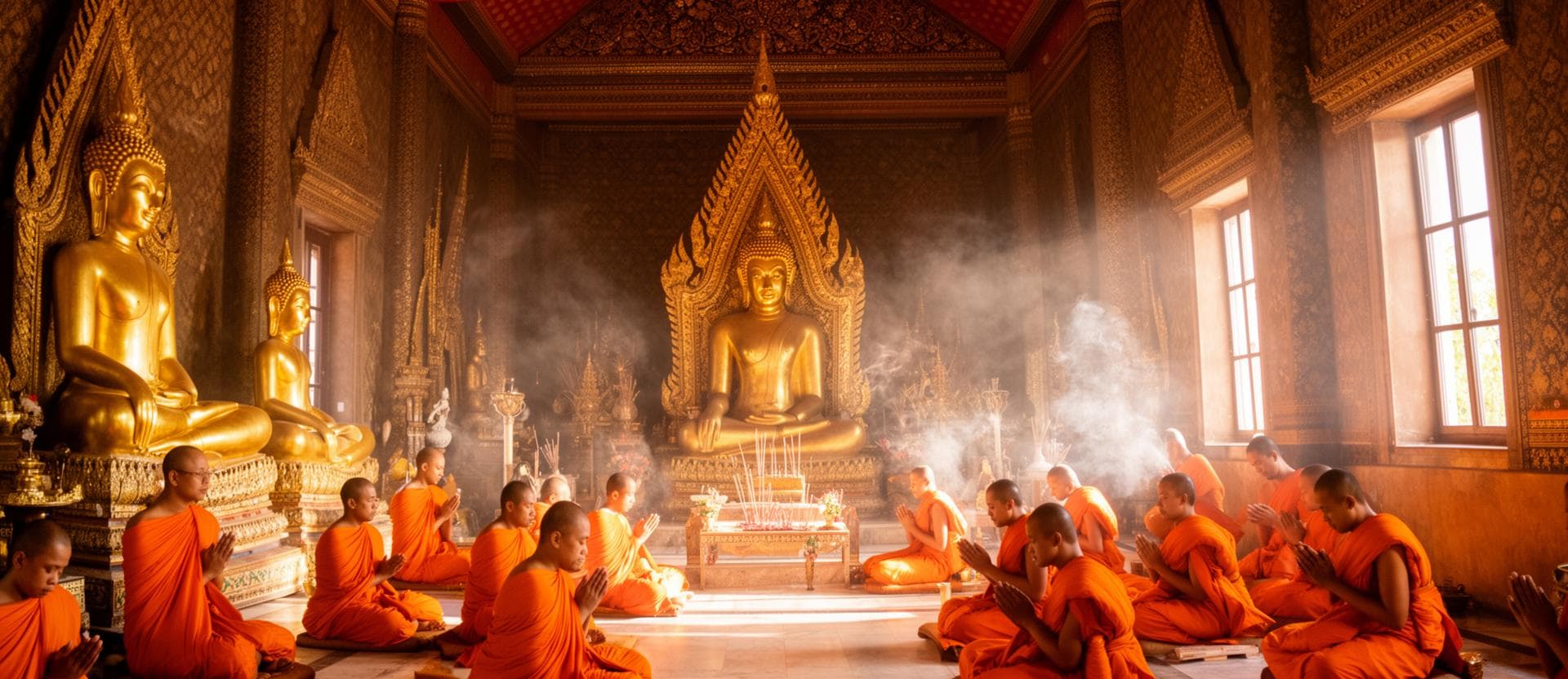
Temples & Religion
From the ancient Hindu temple-mountains of Angkor to the orange-robed monks of modern pagodas, spirituality permeates every aspect of Cambodian life.
Temple Visiting Tips
Dress modestly (cover shoulders and knees), remove shoes before entering buildings, don't point feet at Buddha images, and never touch monks if you're a woman.
Theravada Buddhism
Theravada Buddhism, the "Teaching of the Elders," arrived in Cambodia around the 13th century and gradually replaced Hinduism and Mahayana Buddhism. Today, 97% of Cambodians practice this tradition, which emphasizes individual enlightenment through meditation, moral conduct, and wisdom.
The sangha (monastic community) plays a central role in society. Most Cambodian men ordain as monks at least once, often for a few weeks or months, to gain merit for themselves and their families. There are over 4,000 active pagodas across Cambodia.
Temple Architecture
Cambodian temple architecture evolved from Hindu concepts of the temple-mountain (representing Mount Meru, home of the gods) to more modest Buddhist vihara designs. Key architectural elements include:
- Prasat: Tower sanctuaries, often in groups of five
- Gopura: Ornate gateway towers
- Naga: Multi-headed serpent balustrades
- Apsara: Celestial dancer reliefs
- Stupa: Dome-shaped structures containing relics
- Vihara: Prayer and assembly halls
Famous Temples
The world's largest religious monument, originally Hindu, now Buddhist. Its five towers represent Mount Meru.
UNESCO World HeritageFamous for its massive stone faces of Avalokiteshvara, the bodhisattva of compassion.
216 Stone FacesThe founding site of the capital city, housing important Buddha relics on a 27-meter hill.
City's NamesakeThe floor is covered with 5,000 silver tiles. Houses the Emerald Buddha and gold Maitreya.
Royal TempleSpectacular mountain-top temple with stunning views, dedicated to Shiva.
UNESCO SiteFormer royal capital with stupas containing relics of Cambodian kings.
Royal Burial SiteMonastic Life
Monks follow 227 precepts governing their conduct. They rise before dawn for meditation, collect alms around 6-7 AM, eat their final meal before noon, and spend afternoons studying, meditating, and performing ceremonies.
Visitor Etiquette
Important Rules
- Dress modestly—cover shoulders and knees
- Remove shoes and hats before entering buildings
- Never point feet toward Buddha images or monks
- Women must not touch monks or hand items directly to them
- Ask permission before photographing monks or ceremonies
- Walk around stupas clockwise
- Sit with legs tucked to the side, not cross-legged facing Buddha
Religious Festivals
Cambodians visit pagodas to offer food to deceased ancestors. The most important Buddhist festival.
Celebrates Buddha's birth, enlightenment, and death. Candlelit processions at temples.
Commemorates Buddha's final sermon to 1,250 enlightened monks.
Laypeople offer new robes and necessities to monks after the rainy season retreat.
Frequently Asked Questions
Continue Exploring
Book This Experience
Powered by GetYourGuide — we earn a commission at no extra cost to you.
Get Cambodia Travel Updates
Visa changes, travel tips, and destination guides delivered to your inbox.
No spam, unsubscribe anytime. We respect your privacy.