What are the main Cambodian traditions and holidays?
Cambodia's traditions blend Hindu, Buddhist, and animist influences, with the three biggest celebrations being Khmer New Year (April), Pchum Ben/Ancestors' Day (September/October), and the Water Festival (November). The traditional greeting is the sampeah, palms pressed together with a slight bow, and respect for elders and age hierarchy is paramount. Traditional weddings are elaborate multi-day affairs, though modern urban weddings are often condensed to a single day.
- Khmer New Year (April 13-16) is the most important celebration, with families returning to home villages
- The Water Festival (Bon Om Touk) in November features dragon boat races in Phnom Penh
- Pchum Ben is a 15-day festival honoring deceased ancestors with offerings at pagodas
- White symbolizes mourning, orange represents Buddhism, and red symbolizes luck and protection
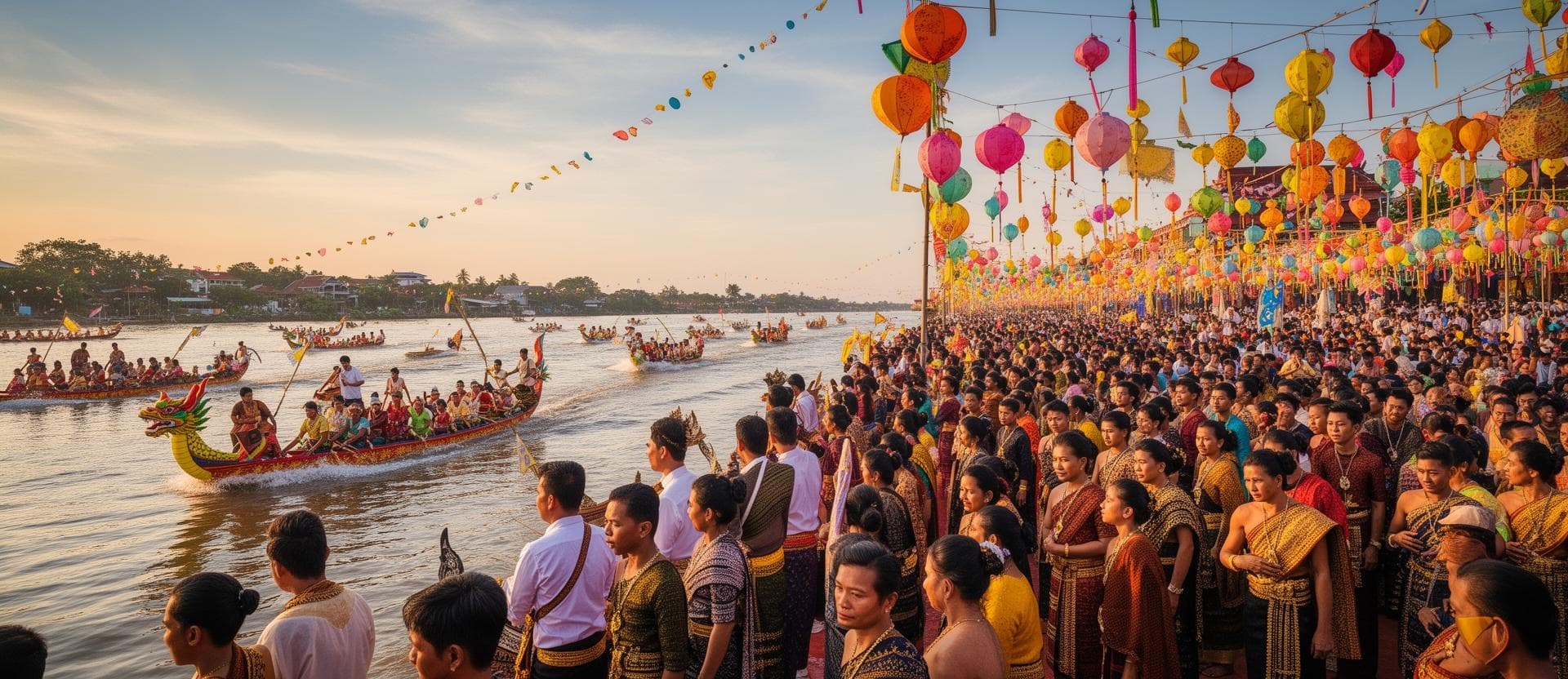
Traditions & Festivals
From dragon boat races to ancestral offerings, Cambodia's traditions blend Hindu, Buddhist, and animist influences into vibrant celebrations of life.
Living Traditions
Cambodian traditions remain vibrantly alive, especially in rural areas. Visiting during major festivals offers unforgettable cultural immersion, though expect transportation challenges as millions travel to home villages.
Major Festivals
Khmer New Year (Chaul Chnam Thmey)
April 13-16
The most important celebration of the year. Families gather, visit pagodas, play traditional games, and build sand stupas. Cities empty as people return to home villages.
Water Festival (Bon Om Touk)
November (Full Moon)
Three-day festival celebrating the reversal of the Tonle Sap River flow. Features dramatic dragon boat races, illuminated boat floats, and fireworks. The biggest celebrations take place in Phnom Penh along the riverside. Explore the destination →
Pchum Ben (Ancestors' Day)
September/October
A 15-day festival honoring deceased relatives. Cambodians visit seven pagodas to offer rice balls (bay ben) to wandering spirits and ancestors.
Royal Ploughing Ceremony
May
Ancient Brahmanical ritual marking the rice-planting season. Sacred oxen "predict" the coming harvest by choosing from seven bowls of food.
Life Ceremonies
New mothers observe "roasting" (sitting near heat), avoid certain foods, and have protective strings tied on baby's wrists. Naming often waits until the child proves healthy.
Most Cambodian men ordain as monks at least briefly, ideally before marriage. The elaborate ceremony involves shaving, prayers, and processions.
Cremation is preferred, with ceremonies lasting up to a week. White is the mourning color. Monks chant sutras, and 49-day and 100-day memorial rites follow.
New homes require blessing ceremonies with monks to expel evil spirits and bring prosperity. Offerings are made to the house guardian spirit.
Wedding Traditions
Traditional Khmer weddings are elaborate multi-day affairs with roots in ancient Hindu-Buddhist rituals. While modern weddings are often condensed, they preserve key ceremonial elements.
Groom's family brings symbolic gifts to the bride's family
Honoring ancestors ceremony with prayers and offerings
Symbolic haircut representing transition to married life
Parents shade the couple, symbolizing protection
Tying of red string bracelets for good luck
Main wedding ceremony with monk blessings
Social Customs
Palms pressed together with a slight bow. The height of hands indicates respect—higher for elders, monks, and royalty.
Age hierarchy is paramount. Younger people use polite pronouns, give way to elders, and seek their blessing for major decisions.
The head is sacred and should not be touched. Feet are low—never point them at people or Buddha images.
Cambodians avoid public confrontation and embarrassment. Criticism is delivered indirectly, and harmony is prized.
Traditional Arts
Traditional performing arts nearly perished during the Khmer Rouge era but have been painstakingly revived. Key art forms include:
- Apsara Dance: Graceful royal ballet depicting celestial dancers
- Sbek Thom: Large shadow puppet theater telling the Reamker epic
- Yike & Bassac Opera: Folk and classical musical theater
- Pinpeat Ensemble: Traditional court orchestra with xylophones and gongs
- Lkhon Khol: Masked male dance-drama based on the Ramayana
Daily Rituals
Everyday life in Cambodia is infused with small rituals and observances:
- Morning alms-giving to monks (tak bat) around 6-7 AM
- Offerings to spirit houses outside homes and businesses
- Burning incense and placing flowers at small shrines
- Checking auspicious days for important activities
- Wearing protective red strings (sai sin) blessed by monks
Frequently Asked Questions
Continue Exploring
Get Cambodia Travel Updates
Visa changes, travel tips, and destination guides delivered to your inbox.
No spam, unsubscribe anytime. We respect your privacy.