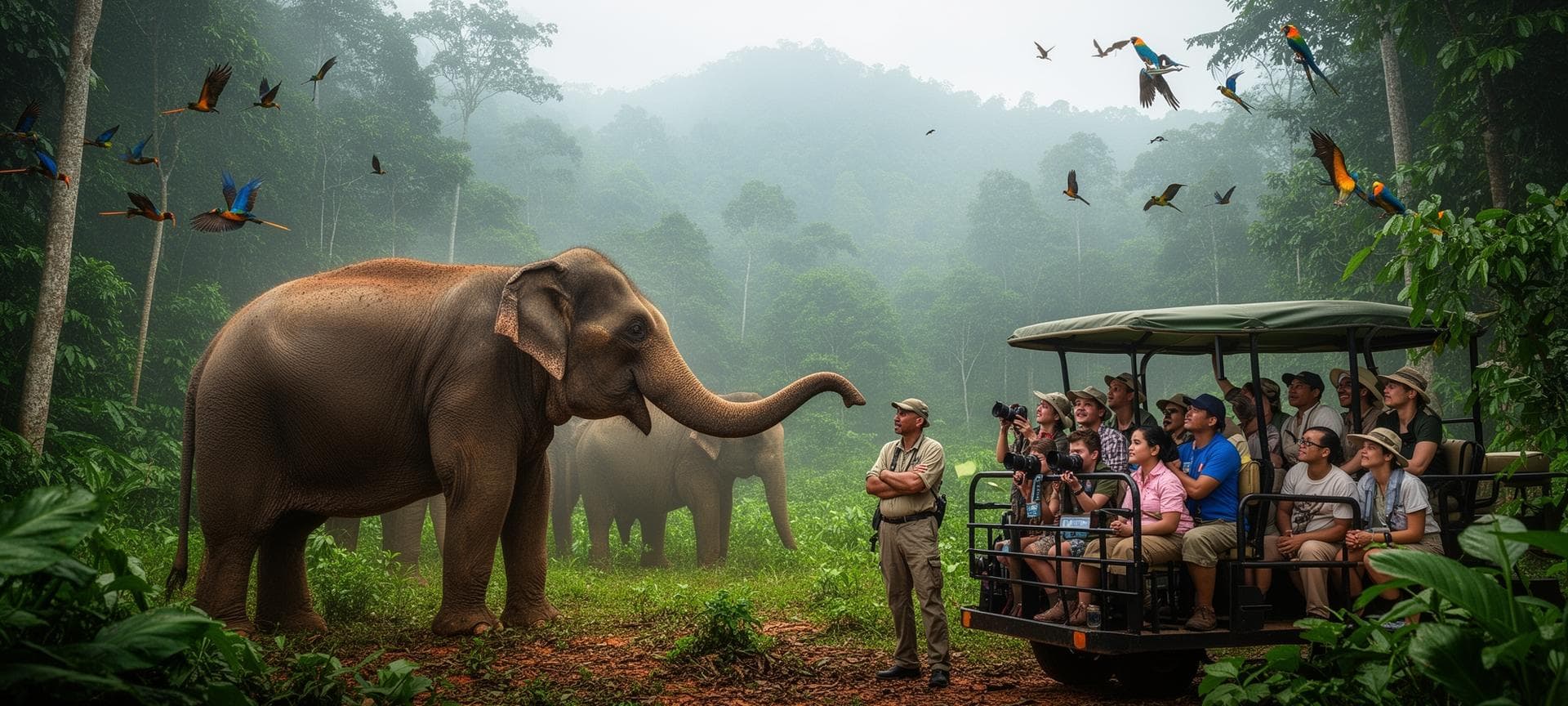
Wildlife Tours
Encounter Cambodia's incredible biodiversity
What is the best wildlife in Cambodia to see?
Cambodia offers incredible wildlife viewing including endangered Irrawaddy dolphins (almost guaranteed sightings in Kratie), Asian elephants in Mondulkiri, the critically endangered Giant Ibis, gibbons, sun bears, and diverse birdlife. The Cardamom Mountains and northeastern highlands remain refuges for endangered species found nowhere else in such numbers.
- Top hotspots: Mondulkiri (elephants), Cardamom Mountains (sun bears, crocodiles), Kratie (dolphins), Tonle Sap (waterbirds)
- Tours range from $20-50 for dolphin watching to $150-350/day for specialist expeditions
- Best season is November to May, with dolphin and bird sightings peaking December to April
- Choose ethical, conservation-focused operators and never ride elephants
Overview
Cambodia is one of Southeast Asia's last great wildlife frontiers. While poaching and habitat loss have devastated populations across the region, Cambodia's vast wilderness areas—particularly the Cardamom Mountains and northeastern highlands—remain refuges for endangered species found nowhere else in such numbers.
From the critically endangered Irrawaddy dolphins of the Mekong to Asian elephants roaming the forests of Mondulkiri, Cambodia offers wildlife encounters that rival Africa's famous safaris. The difference? Far fewer tourists and the knowledge that your visit directly supports frontline conservation.
Why Cambodia for Wildlife?
- • Critically endangered species: Giant Ibis, Irrawaddy dolphin, Siamese crocodile
- • Intact wilderness: Cardamoms are Southeast Asia's largest rainforest
- • Conservation impact: Tourism directly funds protection
- • Ethical options: World-class elephant sanctuaries
- • Undiscovered: Fraction of the tourists of other destinations
Wildlife Hotspots
Mondulkiri
The elephant capital of Cambodia, Mondulkiri's rolling highlands and dense forests are home to wild and semi-wild Asian elephant populations. The Elephant Valley Project offers ethical encounters where elephants roam freely while visitors observe from respectful distances.
- Key species: Asian elephants, gibbons, hornbills, deer
- Best experience: Elephant Valley Project overnight stays
- Best time: Year-round (dry season easier access)
- Access: 6-8 hours from Phnom Penh
Cardamom Mountains
The crown jewel of Cambodian wildlife. This vast rainforest spanning 20,000+ square kilometers harbors sun bears, clouded leopards, gibbons, and the critically endangered Siamese crocodile. Chi Phat and Wildlife Alliance offer immersive multi-day experiences.
- Key species: Sun bear, Asian elephant, gibbon, Siamese crocodile
- Best experience: Multi-day safaris with Wildlife Alliance
- Best time: November-April (dry season)
- Access: Chi Phat (5 hours from Phnom Penh)
Conservation Success
Kratie & Stung Treng
The Mekong River between these two towns hosts one of the world's last populations of Irrawaddy dolphins—gentle freshwater dolphins with distinctive rounded foreheads. Sightings are almost guaranteed with community boat operators.
- Key species: Irrawaddy dolphin (critically endangered)
- Best experience: Sunrise or sunset boat trips
- Best time: December-May (low water, easier spotting)
- Access: Kratie (6 hours from Phnom Penh)
Tonle Sap
Southeast Asia's largest freshwater lake hosts spectacular waterbird colonies at Prek Toal. During dry season, massive nesting colonies of storks, pelicans, and cormorants gather—one of Asia's most important bird breeding sites.
- Key species: Painted storks, spot-billed pelicans, cormorants, milky storks
- Best experience: Prek Toal bird sanctuary tour
- Best time: December-April (nesting season)
- Access: Day trip from Siem Reap
Tour Operators & Guides
These conservation-focused operators ensure your wildlife experience supports protection efforts:
Sam Veasna Center
Siem Reap (Nationwide)
Cambodia's premier wildlife organization. Expert-led tours to see critically endangered species including Giant Ibis, Siamese Crocodile, and Bengal Florican. 100% of profits support conservation.
Elephant Valley Project
Mondulkiri
Observe elephants in their natural forest habitat without riding. Forest walks, gibbon spotting, and overnight stays in the sanctuary.
Wildlife Alliance
Cardamom Mountains
Join rangers on patrol in the Cardamom rainforest. Camera trap checks, wildlife surveys, and supporting frontline conservation work.
Chi Phat CBET
Cardamom Mountains
Community-based ecotourism offering night safaris, bird watching, and multi-day wilderness expeditions led by former poachers turned guides.
Cambodian Rural Discovery Tours
Kratie
Boat trips to see the critically endangered Irrawaddy dolphins in the Mekong River. Community-run, conservation-focused experiences.
Prek Toal Tours
Tonle Sap
Visit Southeast Asia's largest waterbird colonies including rare storks, pelicans, and cormorants. Best from December to April.
Species to Spot
Cambodia's wildlife includes several species found in few other places on Earth:
| Species | Location | Status | Sighting Chance |
|---|---|---|---|
| Asian Elephant | Mondulkiri, Cardamoms | Endangered | Good with guides |
| Irrawaddy Dolphin | Kratie, Stung Treng | Critically Endangered | Excellent |
| Giant Ibis | Northern Plains | Critically Endangered | Moderate |
| Pileated Gibbon | Cardamoms, Mondulkiri | Endangered | Good at dawn |
| Sun Bear | Cardamoms, Virachey | Vulnerable | Rare |
| Leopard Cat | Nationwide forests | Least Concern | Moderate on night walks |
| Bengal Florican | Kampong Thom | Critically Endangered | Seasonal |
| Siamese Crocodile | Cardamoms | Critically Endangered | Good with SVC |
Costs & Budget
Wildlife experiences range from budget-friendly dolphin watching to premium expedition-style safaris:
| Experience | Price Range | Duration |
|---|---|---|
| Irrawaddy dolphin watching | $20-50 | Half day |
| Prek Toal bird sanctuary | $50-120 | Full day |
| Elephant Valley Project | $75-150 | Full day / Overnight |
| Chi Phat wildlife safari | $35-80/day | Multi-day |
| Sam Veasna Center expedition | $150-350/day | Multi-day |
What to Bring
Maximize your wildlife sightings with proper preparation:
Essential Items
- Binoculars (8x42 recommended)
- Neutral-colored clothing (khaki, green, brown)
- Long pants and long sleeves
- Insect repellent (DEET 30%+)
- Sunscreen SPF 50+
- Refillable water bottle
- Headlamp (for night safaris)
Photography Gear
- Camera with telephoto lens
- Field guide to Southeast Asian wildlife
- Spotting scope
- Recording device for bird calls
- Notebook for species list
Best Time for Wildlife
Different seasons favor different wildlife experiences:
| Wildlife | Best Months | Notes |
|---|---|---|
| Irrawaddy dolphins | Dec-May | Low water makes spotting easier |
| Waterbirds (Prek Toal) | Dec-Apr | Nesting season, massive colonies |
| Elephants | Year-round | Dry season easier access |
| Giant Ibis | Dec-Mar | Breeding displays |
| Gibbons | Year-round | Best heard at dawn |
Ethical Wildlife Tourism
Choosing Ethical Experiences
- • Never ride elephants: Choose observation-only sanctuaries
- • Avoid close contact: Keep distance from all wild animals
- • No feeding wildlife: It disrupts natural behavior
- • Choose conservation operators: Verify profits support protection
- • Follow guide instructions: For your safety and animal welfare
- • Don't chase wildlife: Let animals approach on their terms
Cambodia's wildlife faces significant threats from poaching and habitat loss. By choosing ethical operators, you directly fund ranger patrols, community conservation programs, and habitat protection. The operators listed above all reinvest in conservation.
Frequently Asked Questions
Frequently Asked Questions
Related Adventures
Book This Experience
Powered by GetYourGuide — we earn a commission at no extra cost to you.
Get Cambodia Travel Updates
Visa changes, travel tips, and destination guides delivered to your inbox.
No spam, unsubscribe anytime. We respect your privacy.