🛕 Banteay Kdei
បន្ទាយក្តី
Also known as: Citadel of Chambers
Province
Siem Reap
Era
Late Angkorian
Difficulty
🟢 Easy
Crowds
😌 Low Crowds
Key Facts
Built: Mid-12th to early 13th century
Built by: King Jayavarman VII
Religion: Buddhist
Entry Fee: Angkor Pass
Time Needed: 30–60 minutes
UNESCO: ✅ World Heritage Site
A charming, less-visited Buddhist monastery with beautiful devata carvings and an atmospheric, intimate scale.
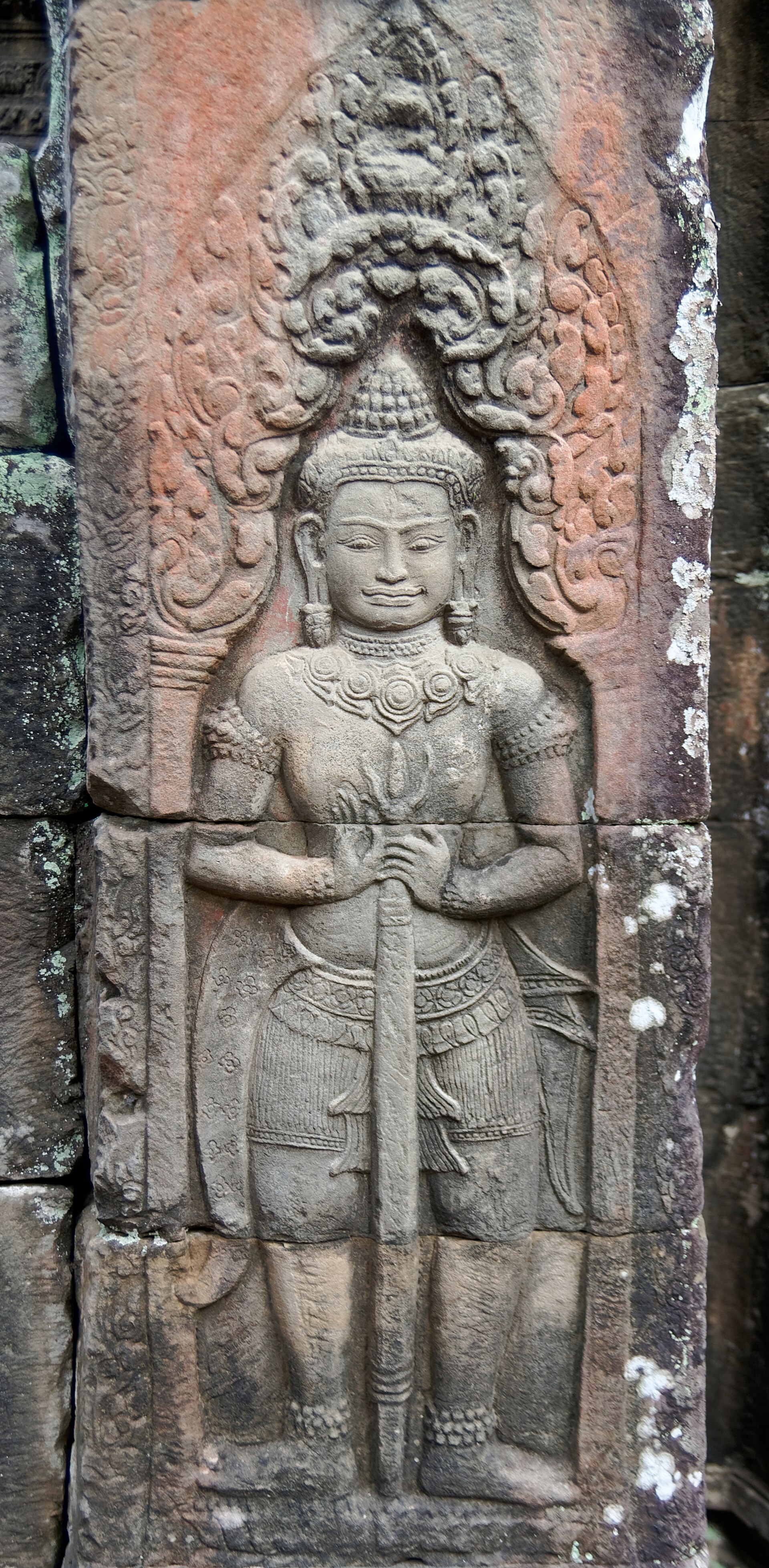
Banteay Kdei is often overshadowed by its famous neighbor Ta Prohm, but this Buddhist monastery offers a more peaceful and intimate temple experience. Built in the same period and style as Ta Prohm, it features similar face towers and apsara carvings but with considerably fewer tourists. The temple was built around an older 10th-century structure and shows multiple construction phases. In 2001, a Japanese archaeological team discovered a remarkable cache of 274 Buddhist statues intentionally buried within the temple grounds, likely during a period of iconoclasm. The Hall of Dancers with its elaborate apsara carvings is particularly beautiful, and the eastern entrance is framed by impressive gopura towers.
Background
Banteay Kdei, "A Citadel of Chambers", is a Buddhist temple at Angkor built in the mid-12th to early 13th centuries during the reign of Jayavarman VII, in the Bayon architectural style. It is similar in plan to Ta Prohm and Preah Khan but less complex and smaller, with its structures contained within two successive enclosure walls and two concentric galleries from which towers emerge. It was built as a Buddhist monastic complex on the site of a 10th-century temple built by Rajendravarman, and small inscriptions attest to its construction by Jayavarman VII and the royal architect Kavindrarimathana. Monks occupied it at various intervals over the centuries, until the 1960s.
Adapted from the Wikipedia article “Banteay Kdei” (revision 1367020855, retrieved 19 October 2026), licensed under CC BY-SA 4.0; text condensed and edited.
Print references cited by the Wikipedia article:
- Coedès, George (1968). Walter F. Vella (ed.). The Indianized States of Southeast Asia. Trans. Susan Brown Cowing. University of Hawaii Press. ISBN 978-0-8248-0368-1
Highlights
- ✦ Peaceful atmosphere with few tourists
- ✦ Hall of Dancers apsara carvings
- ✦ Adjacent to Srah Srang reservoir
- ✦ 274 buried Buddha statues discovery
- ✦ Beautiful eastern gopura entrance
Best Time to Visit
Any time — rarely crowded
Visitor Tips
- 💡 Visit right after Srah Srang sunrise for an empty temple
- 💡 The east entrance is more impressive than the west
- 💡 Great for photography without crowds
Nearby Temples
13.4317°N, 103.8860°E
Get Cambodia Travel Updates
Visa changes, travel tips, and destination guides delivered to your inbox.
No spam, unsubscribe anytime. We respect your privacy.